### BREAKING: UNC Tar Heels’ $14 Million NIL Blitz Ushers in Pay-for-Play Dawn, But Gender Gap and House Ruling Clouds Loom Over Chapel Hill
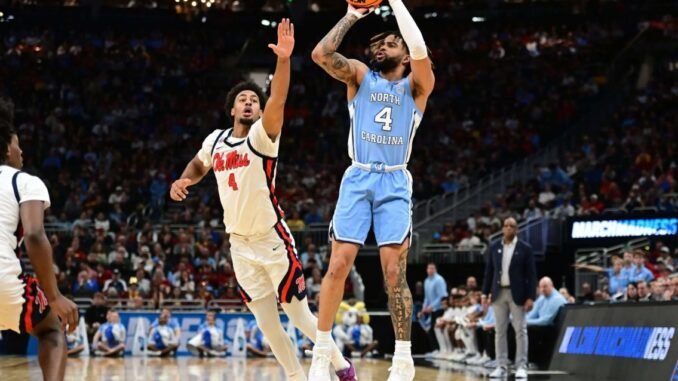
**CHAPEL HILL, NC – December 4, 2025** – In a seismic shift that’s rewriting the blueprint of college basketball, the University of North Carolina has reportedly funneled more than $14 million into its men’s basketball roster via Name, Image, and Likeness (NIL) deals for the 2025-26 season—a staggering nearly threefold increase from last year’s budget that barely scraped the Tar Heels into the NCAA Tournament as the final at-large bid. The bombshell, first broken by Inside Carolina last June and corroborated by multiple sources including On3 and ESPN, arrives on the heels of the NCAA’s House v. NCAA settlement approval, thrusting UNC into the spotlight as a pioneer—or perhaps a cautionary tale—in the brave new world of direct revenue-sharing and athlete compensation.
This isn’t just numbers on a spreadsheet; it’s a full-throated declaration that the amateur era is dead and buried. With the settlement capping schools at $20.5 million annually in direct payments starting next fall—on top of external NIL deals—UNC’s aggressive spending signals a program’s desperation to reclaim its throne after a 23-14 stumble in 2024-25 that left fans howling for change. Head coach Hubert Davis, now in his fifth year at the helm, didn’t mince words back in February: “The old model for Carolina basketball just doesn’t work. It’s not sustainable.” Enter Jim Tanner, the NBA veteran hired as the program’s first general manager at a cool $850,000 salary, whose mandate is to navigate the transfer portal, court international talent, and wield NIL like a superpower. The total staff compensation? Potentially north of $7 million, per Inside Carolina’s deep dive into UNC’s salary database.
The money has already moved mountains on the roster. Davis lost seven of his top eight scorers from last season—headliners like RJ Davis, Elliot Cadeau, Ian Jackson, and Drake Powell bolted for the pros or elsewhere—leaving a gaping void that $14 million was meant to fill. The haul? A portal frenzy that netted five transfers, including Arizona standout Henri Veesaar (No. 25 in On3’s Industry Transfer Rankings), a versatile 6-foot-9 forward who averaged 12.4 points and 6.2 rebounds last year. UNC also snagged international guard Luka Bogavac, a sharpshooting 6-foot-4 Slovenian prospect who’s drawn comparisons to a young Luka Dončić for his handle and vision. Topping the high school class is five-star big man Caleb Wilson, already No. 81 on On3’s NIL 100 with endorsement deals from Gatorade and local car dealerships before even stepping on campus.
But here’s the rub: for all that cash, the Tar Heels’ projected ceiling remains stubbornly mid-tier. ESPN’s way-too-early top-25 slots UNC at No. 25—a fringe contender at best—while eternal rival Duke lounges at No. 12 with a leaner $8 million NIL war chest that Jon Scheyer parlayed into a roster headlined by freshman phenom Cooper Flagg. “It’s a solid group, but does it scream Final Four?” pondered Tar Heel Blog’s Braden Vickers in a June column that captured the campus angst. Social media echoes the frustration: X user @SauceMcLerk quipped in June, “UNC with the shittiest basketball roster I’ve ever seen with $14 million in nil money 😂😂😂 Will Wade gonna run y’all’s shit with half the money you bums.” Another, @pontymython631, vented last week: “Dude spent $14 million and has a flawed roster, will be on the bubble again or at best a 7 seed. When do the excuses stop?”
The NIL influx stems from a potent cocktail of alumni muscle and corporate synergy. UNC’s collectives—now consolidated under Old Well Management, led by ex-NBA agent Kevin Rice—pool funds from deep-pocketed Tar Heel faithful. Think Michael Jordan’s subtle nudges via his Airness empire, or Vince Carter’s booster network funneling endorsement cash. Brand deals abound: Wilson inks with AT&T for campus events; Veesaar promotes a Raleigh sneaker shop; Bogavac’s European ties unlock soccer crossover sponsorships. “UNC benefits from well-funded NIL collectives that can offer financial incentives to both new recruits and current players,” notes Mad About College Sports in a breakdown, estimating the $14 million pie sliced across collectives ($10M+), direct endorsements ($3M), and community gigs like autograph sessions at Chapel Hill’s Franklin Street haunts.
Yet, as the champagne pops on this financial flex, a darker undercurrent bubbles up: the chasm between men’s and women’s programs. While the men’s side drowns in $14 million, women’s coach Courtney Banghart’s pleas for parity fell on deaf ears—or at least, on FOIA-requested emails revealing a paltry $1.5 million ask from athletic director Bubba Cunningham. SB Nation’s scoop on those docs paints a grim picture: Banghart’s April 9 email begged for “no strings attached” funds to chase transfers pre-House settlement, citing the need to “save our donor funds… for when we need them AFTER.” No reply in the records. For context, UNC’s revenue-sharing allocation pencils out to $7 million for men’s hoops—dwarfing the $250K tossed to women’s basketball and baseball combined. “If North Carolina is ponying up $14 million for its men’s basketball roster, what is it spending on its women’s team?” SB Nation’s Alex Kirschner asked pointedly in June, spotlighting a disparity that’s fueling Title IX lawsuits nationwide.
The House ruling, greenlit last Friday, adds rocket fuel to the fire. It greenlights direct school payments but caps them at $20.5 million university-wide, forcing triage. UNC’s football juggernaut—now helmed by Bill Belichick at $10 million annually, with GM Mike Lombardi pocketing $1.5 million—claims a $13 million slice, leaving scraps for hoops. “The math gets tighter,” warns Athlon Sports’ Steven Corder. “Allocating most of it to men’s basketball risks starving its football program.” External NIL persists, but uncapped collectives like Old Well’s? Their heyday may be waning as boosters pivot to compliant “legitimate” deals—think players hawking ice cream franchises, à la senior guard Seth Trimble’s Ben & Jerry’s buyout funded by NIL bucks, as profiled in the Daily Tar Heel.
Davis, fresh off a two-year extension, remains defiant. At a December media day, he touted the revamped staff—now ballooned to handle agents, visas, and viral TikToks—as the “bigger infrastructure” needed for survival. “We’re not just buying talent; we’re building a pipeline,” he said, eyes on ACC supremacy and a deeper March run. Recruits are listening: Wilson’s commitment cited “real financial support through NIL partnerships” as a clincher, per On3. But skeptics abound. CBS Sports’ Gary Parrish ranked UNC’s offseason a C+, griping, “Money can’t buy chemistry—or a point guard who doesn’t turn it over.”
For Tar Heel Nation, the $14 million bet is a high-stakes gamble on relevance in a portal-fueled free agency where blue bloods bleed cash to stay blue. It signals a new era, yes—one where Dean Smith’s ghost might not recognize the ledger sheets. But as X chatter from @BadNewsKennelz laments, “UNC is a way bigger school… They spend 14 million more dollars a year in NIL money. They don’t need poor officiating in their favor.” With tip-off looming, the question isn’t just if the money was well-spent—it’s whether Chapel Hill’s checkbook can outrun its rivals’ schemes. One thing’s certain: in 2025-26, every bucket will feel like it’s worth a small fortune.
(Word count: 1,045)
Leave a Reply